_edited.png)
Cinema Has Lost Its Body: From the Sidewalk to the Terminal
- Lucas Marques

- Dec 27, 2025
- 2 min read
By Lucas Marques
I remember exiting the street-side theaters; the impact of the sidewalk, the city air hitting my face as if the projection itself continued through the choreography of pedestrians and the roar of buses. There was an organic continuity between fiction and asphalt. Cinema was a geographical event, a displacement that forced us to negotiate with the world. But then, the kidnapping began: first, the enclosure within shopping malls—what anthropologist Marc Augé defines as "non-places." Cinema became an appendage of consumption, a mere stop between the food court and the storefront window—a transit space devoid of identity where the spectator is, first and foremost, a monitored customer.
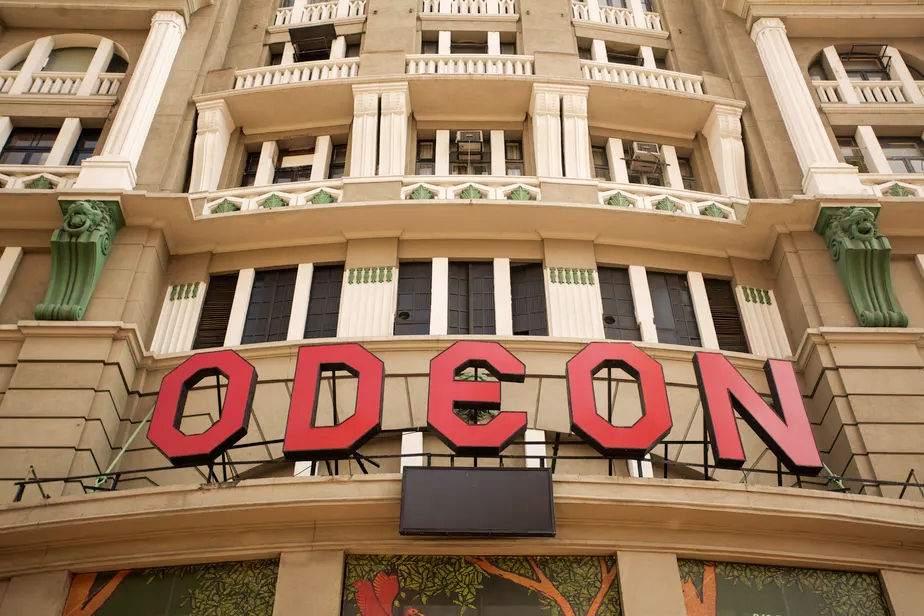
Even so, in the mall, a sense of physical resistance remained: the smell of must, the syncope of light in the dark, the body of the person in the next seat breathing, laughing, or growing bored. Today, however, we live in the era of the absolute "image-commodity." The film now inhabits the same ecosystem as the text message and the dinner delivery order. The screen, once a window to the infinite, has been domesticated and reduced to a pocket terminal.
The defense of street-side cinemas should not be built on nostalgic tears, but with political rigor. Sociologically, streaming operates through what philosopher Byung-Chul Han describes as the "expulsion of the Other." In the comfort of your sofa, the algorithm doesn’t challenge you; it mirrors you. The street-side theater, conversely, forces the body into alterity. It is the necessary "agora." By migrating to the digital environment, cinema loses its function of confrontation. The individual becomes incapable of enduring the timing of the Other or the rhythm of a work that cannot be fast-forwarded.

This agony of space is captured with raw honesty in Tsai Ming-liang’s Goodbye, Dragon Inn. The film records a final screening at a monumental Taipei theater on the verge of closing. There is no cheap drama; there is only dilated time, leaky ceilings, the sound of seats, and wandering bodies searching within the ruins for something the outside world no longer offers: communion in the dark. The death of that theater is the death of a way of inhabiting the city. When cinema becomes a fragmented digital archive, it ceases to be centrifugal—throwing us outward—and becomes centripetal—imprisoning us within ourselves.
Cinema is losing its body. And a cinema without a body, without the street, and without the unpredictability of the social encounter is merely light that shines but does not warm. It is the consolidation of a society of the isolated, where art serves as nothing more than wallpaper for our own programmed solitude.
Comments