_edited.png)
Cinema as Drift: The Phenomenology of the Invisible in Lenz Olaf
- Richard Caeiro
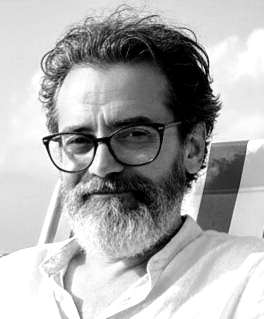
- Jan 5
- 2 min read
Updated: Jan 6
By Richard Caeiro

There are moments in cinema when the image ceases to be a window into the world and becomes a mirror for thought. In WHAT IS WRONG WITH THIS COUNTRY?, Lenz Olaf does not hand us a map, but rather a compass that spins aimlessly, purposefully disoriented. As a spiritual heir to the Nouvelle Vague and the essayistic collages of Jean-Luc Godard, Olaf uses cinema not to explain his nation, but to capture its intangible soul through an aesthetic of fragmentation.
The film takes the form of a constellation of sensory ruins. Detached sounds of cars, the screeching of skids that tear through the silence, and graphics that invade the screen operate in a constant dialectic: it is literature desperately trying to account for what the image, in its purity, cannot translate. This tension between Logos (the text) and Physis (the nature of the image) creates a twilight zone. When we observe the play of light on a rooftop or the detail of a banal object, we are thrust into what Maurice Merleau-Ponty would call the "phenomenology of perception"—that pre-reflective instant where light evokes an involuntary memory, an emotion that precedes language itself.


This aesthetic drift evokes Walter Benjamin’s figure of the flâneur: the artist who traverses the metropolis not as a tourist, but as a collector of vestiges. Olaf reads the city as a ciphered text, where error and noise are integral parts of the narrative. There is no search for a final synthesis; instead, there is the exposure of Heidegger’s Lichtung (the clearing)—that moment in which the truth of a country simultaneously unveils and conceals itself beneath the light of the roof tiles and the urban chaos.
The director understands that cinema can be a tool that bypasses answers to prioritize the aesthetic experience of the journey. As in Heidegger’s Holzwege (forest paths), the walking is the destination itself. In investigating "what is wrong" with his country, Olaf ultimately finds a terrible beauty in the search: the poetry of friction and the courage to embrace the role of an ontological stranger in his own land. It is an exercise in freedom that reaffirms experimental cinema as the most rigorous form of visual philosophy.



Comments